Aug
17
RTB on Concordism, ID Theory, and Evangelism
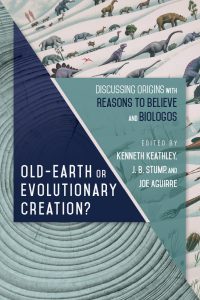
As I recall, this is not the first time I have posted on the topic of concordism in Christian apologetics, particularly as used by the Reasons to Believe (RTB) organization. This time, the source is Chapter 1 of the book Old-Earth or Evolutionary Creation?: Discussing Origins with Reasons to Believe and BioLogos (2017), which addresses related matters as well. The teams from RTB and BioLogos were asked “What views define your organization?” After they gave their responses, Robert Stewart (one of the Southern Baptist theologians acting as moderators) commented and asked for a bit of clarification on a few points.
The following is the response of RTB, represented by Hugh Ross and Kenneth Samples, to that redirect:
— — —
Our concordist approach. Concordism has gotten a bad rap from both theologians and scientists because it is often conflated with a fusion or a near-fusion model for integrating science and Scripture.
The separate magisteria model views the Bible and the world of nature or science as separate, nonoverlapping domains. The complementarity model espoused by evolutionary creationists sees only a very slight overlap. For example, most evolutionary creationists accept that the Bible explicitly teaches that the universe had a beginning, but they deny that the Bible addresses Earth’s physical history or the history of life on Earth.
The fusion model, otherwise known as hard concordism, sees a near-total overlap between the Bible and science. Virtually every Bible verse is seen as possessing scientific implications, and virtually every fact of nature is viewed as having biblical implications. For example, people holding this perspective often claim that the Bible gives scientific details on dinosaurs, several hominid species, extraterrestrial life, and particle physics.
Reasons to Believe holds to a constructive integration model, otherwise known as soft or moderate concordism. We see considerable but far from total overlap between the Bible and science. For example, we believe Genesis 1-11 offers a literal, chronologically ordered account of the origin and history of the universe, Earth, Earth’s life, and humanity. We believe Job 37-39, Psalm 104, and Proverbs 8, as well as several other Bible passages, add substantial scientific details to the Genesis 1-11 accounts of natural history. However, we acknowledge that most of the Bible’s teachings are scientifically neutral or irrelevant and that most scientific findings have no bearing on the Bible or the Christian faith.
Scripture’s predictive power. The degree of Scripture’s perceived predictive power seems to be a major difference between Reasons to Believe and BioLogos. Where the two organizations clearly agree on this issue is the belief that many Old Testament passages accurately predicted in remarkable detail, many centuries in advance, the events concerning Christ’s first coming. It is possible we also agree that the Old and New Testament demonstrate predictive success in foretelling future historical events unrelated to Christ’s incarnation.
Reasons to Believe does hold that the Bible demonstrates broad predictive success in foretelling future events in human history. For example, we see the book of Daniel as accurately predicting, far ahead of its time, key events in the history of the Persian, Greek, and Roman empires. We view many of the events in the history of the modern nation of Israel as fulfillments of Bible prophecy.
Just as the Bible shows predictive success with respect to events in human history, we also see its predictive success in natural history. An obvious example is in Genesis 1, which correctly describes ten miracles of natural creation and places them in the correct chronological sequence. Another example is the biblical description of the fundamental features of Big Bang cosmology thousands of years before its discovery by astronomers.
We see the Bible’s consistent predictive success as one of the most important tools for evangelism. Of those we have led to Christ, almost every unchurched, initially biblically illiterate American adult has cited the demonstration of the Bible’s unique predictive power as the turning point in their accepting the Bible as the inspired, authoritative, inerrant Word of God.
Relationship to intelligent design theory. We at Reasons to Believe were researching and proclaiming evidence for intelligent design long before there was an intelligent design movement or before organizations such as the Discovery Institute were founded. However, we differ from most intelligent design movement proponents in that we explicitly identify Jesus Christ as the intelligent designer and we explicitly reject young-earth creationism and global flood geology. Most importantly, we make our case for Christ as the intelligent Creator and designer of the entire natural realm in the context of a biblical creation model that is testable, falsifiable, and predictive.
We engage the secular scientific community rather than attack it. It is through the testable, falsifiable, and predictive components of our model and our commitment to developing and fine-tuning our model that we gain audiences from the secular scientific community. Through such engagements, we have seen numerous unchurched scientists commit their lives to Jesus Christ as Lord and Savior.
We agree with intelligent design movement proponents that all forms of naturalistic models for the origin and history of life, including both classical and neo-Darwinian, are false. However, we recognize that scientists will cling to their models, no matter how many flaws in them are pointed out, until they see a model with superior explanatory power and greater predictive success to take their place, and because of that we focus our efforts on making a positive case for our biblical creation model.
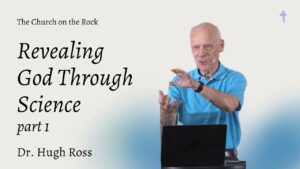
Mission of evangelism. Our audience is both Christians and non-Christians. Our mission is primarily evangelism. We equip and train Christians to use science apologetics as a tool to bring unbelievers to faith in Christ. We also directly appeal to non-Christians to consider the weight of scientific evidence for the Christian faith and for the inspiration and inerrancy of the Bible. We exhort non-Christians on the basis of the evidence we have presented to repent and submit their lives to Jesus Christ.
For our evangelism to be effective, we recognize that it is insufficient to simply show that no contradiction exists between science and the Bible. We must do more. Reasons to Believe’s mission is to develop and proclaim a biblical creation model that is testable, falsifiable, and predictive, one that demonstrates greater explanatory power and breadth than competing non-theistic and theistic models and that shows greater success in predicting future scientific discoveries.
We are committed to showing the scientific differences between our biblical creation model and mainstream naturalistic and deistic scientific worldviews. We also look at differences between our biblical creation model and the creation models of Hindus, Buddhists, Muslims, Mormons, and other faiths. We believe to do less is to miss opportunities to fulfill the Great Commission (Mt. 28:18-20).
— — —
There are a few areas in which I don’t 100% line up with RTB — e.g., I am uncomfortable using the word “predicts” in some cases and would prefer phrasing like “is fully compatible with” or “strongly implies/indicates”. But, I am a supporter of the RTB Creation Model and very much appreciate their work both in developing apologetics materials for the rest of us and in the evangelizing work that they do.