Aug
24
BioLogos on TE/EC, Its Scientific Tent, and Differences with RTB
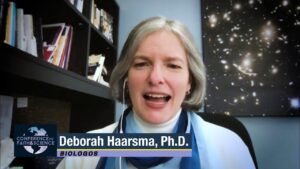
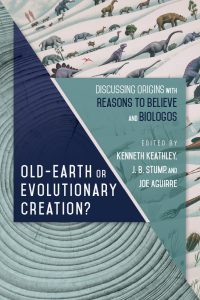
Last week I cited from Chapter 1 of the book Old-Earth or Evolutionary Creation?: Discussing Origins with Reasons to Believe and BioLogos (2017), quoting representatives of RTB as they clarified their organization’s approach on a few things. In that same redirect, Robert Stewart (one of the Southern Baptist theologians acting as moderators) also commented and asked for clarification from BioLogos on a few other matters. The following is the response of BioLogos’s representative for that section, Deborah Haarsma:
— — —
Theistic evolution and evolutionary creation. The difference between the terms “evolutionary creation” (EC) and “theistic evolution” (TE) is both semantic and substantive. The terms share the same core meaning: that God used the process of evolution to create living things. “Theistic evolution” has been around much longer, and some at BioLogos continue to use it for continuity, especially in scholarly contexts. However, the theology associated with the term is not well defined; it has been claimed by people of many religious views, including those who don’t believe in a personal God and deists. The term “evolutionary creation” is newer and is typically claimed by Christians who see the Creator as the God of the Bible and their personal Savior. The use of creation as the noun evokes these core doctrines and affirms the unity we share with young-earth creationists and old-earth creationists around these doctrines. The use of EC is an effort to reclaim the definition of creationist as one who believes in the Creator, rather than the popular usage as shorthand for “young-earth creationist.”
“Theistic evolution” can also imply a special version of the science of evolution. No one uses terms like “theistic gravity” or “theistic photosynthesis,” since all of us, Christian or not, are looking at the same scientific processes. The use of TE can imply that if theistic was dropped, then the word evolution would be atheistic by default. We aim to avoid that implication.
The size of our scientific tent. Does BioLogos require a commitment to “Darwinism”? That term tends to cloud the debate rather than clarify, since it has been used in many ways over the decades, not only by Christians but in scientific circles. Darwin’s original theory has been expanded and modified extensively over time. BioLogos emphasizes the areas where the current scientific evidence and mainstream consensus is strongest and encourages debate and discussion in areas that are debated among experts in evolutionary biology. Thus we strongly affirm evolution as the development of life by descent with modification, including the common ancestry of all life on earth. Someone who disagrees with common ancestry would be outside the BioLogos tent. However, we welcome debate within BioLogos on questions currently debated in the scientific community, such as the relative importance of various natural mechanisms in evolution and whether genes or organisms are most central to the evolutionary story. Note that evolution is not a theory in crisis; scientists are not doubting whether evolution occurred or whether all life on earth shares a tree of common ancestry.
Commonalities and differences with RTB. Bob proposes that the commonality of our organizations is our commitment to “legitimate science” and that our differences are in audience and purpose. I would describe it differently and, based on my exchanges with Hugh, I expect he would as well.
On the science side, if legitimate science refers to the conclusions of mainstream science, then our organizations definitely do not agree, especially regarding the science of evolution. If legitimate science refers to the value we place on scientific investigation, the RTB and BioLogos are much closer.
At a recent public forum, a moderator asked Hugh and me what we saw as our primary disagreement. We discussed it and agreed that our differences regarding biblical interpretation are at least as strong as our scientific differences. RTB believes that the doctrine of special revelation requires a Christian scientific picture to differ from mainstream science, especially in topical areas related to animals and humans. BioLogos disagrees; we believe the Bible provides a strong foundation for pursuing science in all areas of the natural world, and that evidence from general revelation is just as reliable for animal and human evolution as it is for astronomy and geology. We agree that special revelation is essential to understanding topics such as the image of God and the spiritual capacities of humans, but not because we are “nephesh” creatures. Rather, we view science as limited and unable to fully answer spiritual questions. Also, we do not see the Bible as making specific scientific predictions, although it prophesies truly about the future of God’s work with his people. RTB may describe their concordism as soft or moderate, yet we feel many of their concordist claims are unwarranted by the text, such as claiming the scriptural phrase “God stretched out the heavens like a tent” is a prediction of the expansion of the universe in the Big Bang.
Regarding purpose and audience, the two organizations are both committed to presenting a positive interaction between science and faith, and both see themselves as Christian ministries and not mere academic discussion. Our differences in this area are more a matter of emphasis and approach. RTB is more focused on evangelism and bringing non-Christians to Christ, while BioLogos is currently more focused on keeping Christians from leaving the faith over perceived conflicts with science, yet both RTB and BioLogos minister to both groups. Both organizations use agreements with mainstream science as a strategy to build trust with non-Christians. However, at BioLogos we do not have significant differences with mainstream scientific findings, and we feel there are dangers in the RTB approach of making such differences central to their evangelistic work.

The Holy Spirit uses many means to bring people to Christ, and we are grateful that many have come to faith this way. However, we see a danger in asking people to accept (what we see as) inaccurate views of evolution as part of their coming to Christ. At BioLogos, we affirm mainstream science and focus on differences in worldview, arguing that the whole picture of the universe — from science to human culture to experience — fits better in a Christian worldview than in an atheistic worldview. We work to address atheistic arguments and remove perceived scientific barriers to coming to faith, but in the end we find that most people come to faith for reasons having little to do with science and everything to do with spiritual experience and an encounter with the teaching, death, and resurrection of Jesus Christ.
— — —
As an Old Earth Creationist (OEC) and RTB fan, I obviously differ with some of what Haarsma stated. For example, contrary to her authoritative statement about evolution not being a “theory in crisis” (as per the title and thesis of Michael Denton’s noted book), I still think that it is. This is connected to BioLogos’s tendency to be much more accepting of “mainstream scientific findings” and the “current scientific consensus”. Like RTB, I appreciate much of what modern scientific research has discovered but also recognize that the worldview issues (mentioned by Haarsma) often color interpretation of the data — even more in the life sciences (e.g., zoology, anthropology) than in the physical sciences (e.g., physics, geology).
Nevertheless, I found this section of the book to be helpful in my own understanding of where BioLogos is coming from, and I appreciate their desire “to address atheistic arguments and remove perceived scientific barriers to coming to faith.”