Sep
14
The Appeal of Transcending Intelligences from Other Worlds
“Science is not only compatible with spirituality, it is a profound source of spirituality.” — Carl Sagan
A number of years ago, the late Chuck Colson wrote a piece discussing worldview ideas in film, especially those of a New Age flavor. After talking about Avatar, he brought up the movie Contact, and that’s where I want to pick it up from….
— — —
Avatar brings to mind another film: Contact. Based on the novel by Carl Sagan, of ‘Cosmos’ fame, whose films portrayed a meaningless universe, it tells the story of an agnostic scientist, Ellie Arroway, who receives and decodes a message from extraterrestrials.
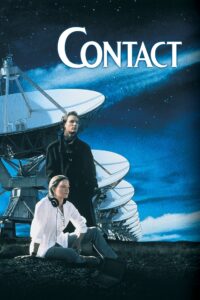
The encounter between these extraterrestrials transforms her life and makes her see the universe and our place in it in a whole new way.
Sagan’s passionate desire to find life in outer space caused one writer to ask, “Why is Carl Sagan so lonely?” Why did a man whose scientific worldview led him to dismiss the Christian view of God put so much stock in intelligent life on other worlds?
The answer is that this worldview, which reduces man to nothing special in an insignificant corner of the cosmos, is unbearable. The idea that we are alone, that we have no special purpose and no meaning that goes with that purpose, creates despair. So we imagine “transcending intelligences from other worlds” that make us feel better.
What Sagan’s “transcending intelligences” do for Ellie, Cameron’s blue-skinned natives in Avatar do for his wheelchair-bound hero, Sully. They provide him with meaning and purpose he can’t find on Earth. They set him free not only from his physical limitations but, more importantly, his spiritual ones.
Sure, it’s fantasy. Many scientists, however, believe that the idea of intelligent life imagined by Sagan, Stephen Hawking, and others is extremely remote. E.T. probably hasn’t called because he’s probably not out there.
Even if E.T. is out there, the solution for the longing expressed in Contact and Avatar isn’t to sit by the phone waiting for him, or imagining other life forms. It’s embracing biblical truths about who we are and what our purpose is.
It’s coming to grips with the fantastic notion that even in the vastness of the cosmos, we are not alone, and we never were. And even more fantastically, we are loved. Loved by the very creator of the cosmos! We were made — crafted — in His image. Rescued from loneliness and despair by His only Son.
And not even the latest 3D special effects can top that.
— — —
I think this is a fair assessment. Comments?
(H/T John Stonestreet and the Colson Center for Christian Worldview)