Oct
19
Reason and the Sufficiency of Scripture, part 1 of 2
Originally, I prepped this post in advance (and began its sequel), because I was going to be on vacation for over a week and wanted material to pre-schedule. Then, a health concern came up, and travel plans were canceled. But, no reason why we can’t still delve into this topic…
Beginning with this post, I will be citing the last several pages from the second chapter of The Case for Traditional Protestantism by Terry L. Johnson. The subject, as you may have guessed, is various aspects of the doctrine of Sola Scriptura — e.g., inspiration, inerrancy/infallibility, authority. But, rather than write/quote about those three, which are very common topics, I chose to focus on a couple others that are examined later in the chapter.
I thought Johnson did a pretty good job with it. Maybe you will find it helpful in understanding the subject, as well.
— — —
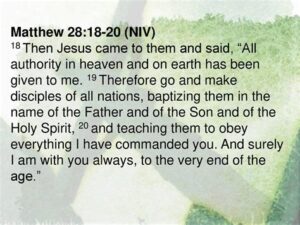
While the church itself cannot be the final authority, it does have authority. Jesus has given the church the ‘keys of the kingdom’ and the power of ‘biding and loosing’ (Matt. 16:18; 18:18). The church is the institution authorized to preach the gospel and administer the sacraments (Matt. 28:18-20). This authorization implies the task of interpreting that gospel and its ordinances. This is authority aplenty!
As noted above, ‘the church’ is also the community of faith within which biblical interpretation takes place. The Reformers, classical Protestantism, and wise believers today have not encouraged biblical exposition in isolation. As Keith Mathison points out, the Reformers believed in sola scriptura, not solo, that is, Scripture alone, not Scripture only, not Scripture in isolation from the church and its history. They repudiated the radicals and their hyper-individualism which placed ‘the private judgment of the individual above the corporate judgment of the church’. One ought constantly to be checking one’s reading of Scripture against that of the whole church and interpreting one’s reading within the boundaries of orthodoxy.
Yet the church is subject to the Word of its Lord. In the end we must say that tradition and church do not judge, but are judged by, Scripture. Scripture is the norma absoluta, the absolute norm.
Finally, while reason cannot be allowed to usurp the place of Scripture as the final and supreme authority in the church, it too has a subordinate role to play in knowing the will of God. Luther famously referred to reason as ‘the devil’s whore’. Unfettered reason, autonomous reason, reason which believes only the observable, the empirically verifiable, the ‘reasonable’ as define by a closed system of cause and effect, is the death of revealed religion. Enlightenment-inspired whoredoms confirm Luther’s scepticism, as modernists have all but ‘sold the ranch’ (for example, the doctrines of the Trinity, the dual nature of Christ, substitutionary atonement, justification, inspiration of Scripture, traditional ethics, miracles, etc.) in the name of reason. Over the last hundred or so years ‘the assured results of science’ trumped orthodox Christian teaching at every turn. The conflict between faith and reason has been a rout, though it has been a pyrrhic victory. The ‘mainline’ denominations are now on the ‘sideline’, their churches empty while conservative churches are full. Why? Because they are unable to resist the latest ‘politically correct’ thing. The zeitgeist (spirit of the age) has robbed the church of its doctrinal content, its message, its spiritual power and its audience.
Yet, we value reason. We are to love God with all of our minds (Matt. 22:37). He invites us, ‘Come, let us reason together’ (Isa. 1:18). God’s wisdom is ‘reasonable’ (James 3:17). The Bible cannot be understood without the application of reason to its contents (see below on Scripture’s sufficiency ). But reason must be subordinate to Scripture. Where they conflict, we are to humbly submit our minds to Scripture’s supreme authority.
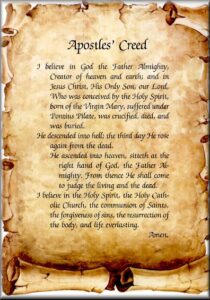
Let’s review what might be the situation for many of us. In our weekly services we may recite the Apostles’ Creed. This is a tradition. It is also a historic Creed. We recite it because we believe it faithfully represents the teaching of Scripture. But it is not our final authority in any matter of faith — Scripture is. We may belong to a Presbyterian church. There, the Session has governing authority. But the Session is not the final authority; Scripture is. Presbyterians will regularly cite the Westminster Confession of Faith and the Larger and Shorter Catechisms. They are traditions. They are historic. They are reasonable. But they are not the final authority. As wonderful as they are, they are not final. In fact they are called ‘subordinate’ standards, that is, subordinate to Scripture. So also are our denominations’ books of church order and church constitutions. Yes, they are important. They have stood the test of time and are valuable. We learn from them and use them as guides. They are full of wisdom. But their authority is not final and they are subject to change.
Most churches have many fine traditions. Most church practices are reasonable. But tradition and reason are not the final authority in matters of faith and practice. If they were, Baptist, Congregational, and Presbyterian churches would not have organs or any musical instruments in their churches. Presbyterians didn’t for over two hundred years. Some might applaud this. But neither would those churches have microphones, speakers, electric lights, or central heating and air-conditioning. ‘The ways things have always been done’ has never been the principle upon which classic Protestants have decided these things. How then do we determine doctrine and policy and practice in the church? How do we settle disputes and controversies?
“The supreme judge by which all controversies of religion are to be determined… can be no other but the Holy Spirit speaking in the Scripture.” (Westminster Confession of Faith, I.x.)
We value tradition, the church, and reason. But our final authority is Scripture. We believe that the Bible is inspired by an all knowing and eternal God. It is true, and it is authoritative in all that it affirms. This leads us to our last point.
The apostles believed that, ‘All Scripture is inspired by God and profitable for teaching, for reproof, for correction, for training in righteousness; that the man of God may be adequate, equipped for every good work’ (2 Tim. 3:16-17).
All that we need in the way of doctrinal, moral, and ecclesiastical training is found in the Scripture. The sixty-six books of the Old and New Testaments are sufficient to equip the people of God ‘for every good work’. Not just ‘some good works’. Not just ‘most good works’. No, the Bible equips us for every situation. The Bible is complete, unique, sufficient.
The case can be made that every corruption of biblical Christianity begins by compromising the principle of sufficiency. Every deviation from the Christianity established by Christ and the apostles begins by adding to the Bible or by taking away from it. Every deviation is the Bible plus or minus something.
For the Christian Scientists, it is the Bible plus Mary Baker Eddy’s Key. For the Mormons it is the Book of Mormon. For the Jehovah’s Witnesses it is the Watchtower. For the Seventh Day Adventists it is the revelations of Ellen White. For the Roman Catholics, it is tradition and the magisterium (the authoritative teaching function of the church, expressed through its hierarchy of Bishops and Popes). For modernists, it is reason, or common sense, or the latest scientific discoveries. Calvin’s question of all practices and beliefs was this: ‘By what word of God, by what revelation, by what example, is this done?’ Unless a practice comes from the Holy Scripture, it has no place in the church. Scripture alone determines our faith and practice. To depart from this position is to be guilty of the above-mentioned sins of the Pharisees who, ‘neglecting the commandments of God… hold to the traditions of men’ (Mark 7:8).
Back in 1977, just as the Council on Biblical Inerrancy was beginning its work, J.I. Packer was already announcing to his classes with amazing prescience his conviction that the real battleground over the following decades would not be over Scripture’s inerrancy, but over its sufficiency. Hermeneutical magicians were already juggling texts in such a way as to demonstrate that the modern situation so differed from the ancient that the old Scriptural norms need not apply. The Bible is not an adequate guide in answering today’s questions, they implied. It was this tendency that prompted Noel Weeks to write The Sufficiency of Scripture, addressing not liberals who deny biblical infallibility, but conservatives who affirm it but deny its sufficiency. Women’s roles, sexual ethics, and ordination are suddenly up for grabs, as also are pragmatic ministry concerns, where the advice of Wall Street, Madison Avenue, and Hollywood (that is, business, marketing and entertainment industries), as well as the insights of our ‘therapeutic’ culture, are valued over those of the Bible by churches seeking to grow.
“The contemporary church’s abandonment of sola Scriptura has opened the church to some of the grossest imaginable abuses — including honky-tonk church services, the carnival sideshow atmosphere, and wrestling exhibitions.” — John MacArthur, Californian pastor and founder of The Master’s Seminary
“Therapeutic technique, marketing strategies, and the beat of the entertainment world often have far more to say about what the church wants, how it functions, and what it offers, than does the Word of God.” — signers of the Cambridge Declaration
We can build a convincing case for biblical inerrancy and authority. But if in the end we deny its sufficiency, treating Scripture like a scythe in an age of power mowers, an ox-cart among eighteen-wheelers, storing it in an old barn where it collects dust, unused and unread, its authority is useless. If when we face the supreme challenges of our day we view the Bible, though ‘religiously’ inspirational, as a document written long ago and far away, and therefore unable to answer the complex questions we face today, then the Bible becomes a useless book unable to guide us where it really counts. Over against this growing scepticism we need to remind ourselves that the Scriptures are sufficient to meet the challenges of modern life.
Still we need to be as careful about what we are saying about the Bible’s sufficiency as we are about the Bible’s authority. Sometimes we may have affirmed sufficiency simplistically, or in a matter not adequately nuanced….
— — —
And that is what we (via Mr. Johnson and others) will address in part 2 next week. Stay tuned…