Dec
14
Trump and GOP Are Not to Blame for U.N.’s Global Climate Shortcomings
“U.S. President Donald Trump is the most obvious avatar for the geopolitical shifts confronting the [climate negotiation] talks.” — Politico‘s write-up on the U.N.’s recent Conference of the Parties
The following excerpt comes from Dispatch Energy, one of the mildly-to-moderately anti-Trump newsletters under The Dispatch umbrella. Article author Philip Rossetti pointed out the real “elephant in the room” being ignored at the recent United Nations climate negotiation meeting, the Conference of the Parties (COP). It isn’t who or what many people assume it to be. Note, I have added italics (or bolds) for emphasis in a few places below….
— — —
[T]here is plenty to dislike about Trump’s climate posture. But it’s not the reason for the COP’s many shortcomings. The global climate movement’s real weakness stems from negotiators’ desire to foist climate burdens on the United States while offering nothing in return. While Politico noted that the absence of a U.S. delegation at the COP was an “elephant in the room,” the real elephant in the room is China’s surging emissions. Since 2005, the U.S. has cut greenhouse gas emissions more than any other nation, and if COP delegates want to deal seriously with Washington, they must reckon with the need for burden sharing.
As my fellow Dispatch Energy contributor Roger Pielke Jr. recently highlighted, the U.N. and media outlets alike often incorrectly credit the Paris Agreement for a massive cut in projected emissions. The truth, Pielke explains, is that the initial emissions projections were wildly off-base, and the Paris Agreement has likely had almost no impact on the actual trajectory of emissions.
Similarly, data reveals a big disconnect between what is said at the COP and what is happening on the global stage. While Democrats, foreign governments, and academics have criticized the United States’ withdrawal from the Paris Agreement, the truth is that from 2005 to 2019, we cut carbon dioxide emissions more than every other developed nation combined. Even amid Trump’s purge of climate regulations during his first administration, strong evidence shows that competitive energy markets in the U.S. continue to drive greenhouse gas abatement.
This is in part because economic growth yields efficiency that in turn lowers emissions. So while climate-focused policies may lower emissions, they may do so at an economic cost, which forgoes the emission reductions that naturally come from a more energy-efficient economy. A good example of this phenomenon is the Obama administration’s Clean Power Plan. The limits on carbon pollution from power plants never took effect due to a Supreme Court ruling, but the U.S. nevertheless beat its emission targets a decade early primarily thanks to more efficient natural gas production. These results were delivered by the free market, not regulation, but had the framework been implemented, Democrats would have inevitably credited it.
Meanwhile, the world’s largest greenhouse gas emitter, China, has significantly increased its carbon footprint. From 2005 to 2019, for every metric ton of emission decline in the United States, China increased its own emissions by 3.74 metric tons.
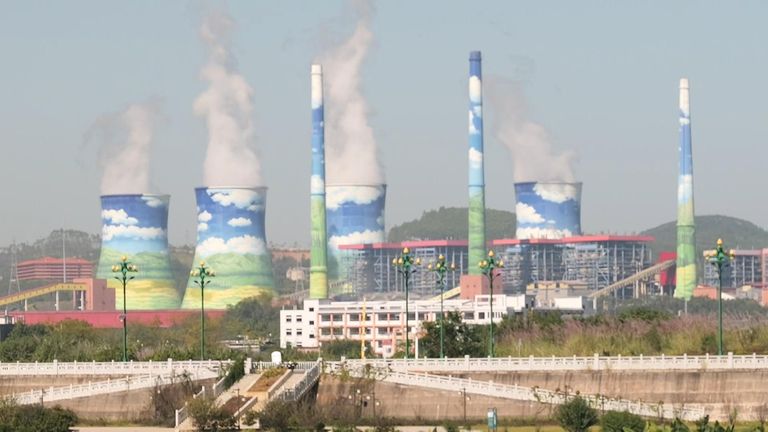
China accounts for more than half of the world’s coal use. And while Beijing’s construction of renewable-energy power plants and electric vehicles is often praised in the media, China has also been rapidly building new coal power plants, hitting a 10-year high for new coal plant construction last year. Call me crazy, but I’m doubtful China is investing billions of dollars into new coal projects just to retire them soon. (Though some on the left argue that their coal plants are better than ours, so we shouldn’t worry about their massive share of emissions.) Ultimately, blaming Republicans for climate woes while praising China stands at odds with observable truth.
Given this context, Republican frustration with the dynamics of global climate policy is understandable…. Simply put, if COP delegates want more climate action from the United States, they must reckon with the need for reciprocity.
— — —
It would be nice if the climate COPs (and climate activists in the U.S.) would acknowledge the elephant (i.e., “that nations like China, Russia, and India are given a pass for their dismal climate performance”), give the U.S. a break, and play fairly. Hey, if they can dream of a carbon-free utopia, then I can dream of honest treatment of facts taking precedence over geopolitical game-playing.
BTW, if you want to read Rossetti’s full article, including relevant links and a chart of “Global CO2 Emissions From Energy, 1990-2023”, go here.