Jan
4
Five Non-Fiction Books I Enjoyed Reading in 2025
Although I am spending more time reading fiction these days, I did manage to read several non-fiction books in 2025, all of which I enjoyed and benefited from to varying degrees. Those described below are sort of a “Top 5” — the ones I consider standouts and would recommend to anyone interested in the relevant topics.
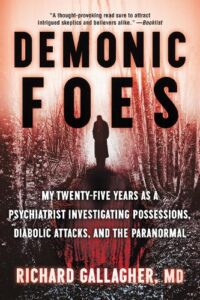
Demonic Foes, by Richard Gallagher, MD
Gallagher tells of his experiences with occultism and exorcisms, first as a skeptical young psychiatric resident and later as a professor of clinical psychiatry, who was asked (by Catholic priests) to consult on cases of possible demonic oppression or possession. He relates several cases that he was involved with personally, as he grew to recognize the genuine article and how best to deal with them and even communicated with a few demonic presences. Personally, I would love to read a similar account by a reputable Protestant doctor with similar qualifications and experiences, but I am not aware of any. Still, Gallagher’s accounts spanning 25 years of investigation are quite fascinating.
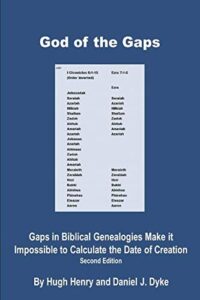
God of the Gaps, 2nd ed., by Hugh Henry and Daniel J. Dyke
This book probably isn’t about what you think it is. “God of the gaps” usually refers to the supposed tendency of ID proponents and “creationists” of different stripes to use a simplistic “God did it” explanation (i.e., outside of normal natural processes) for any current gap in scientific knowledge. However, the premise of this book is summarized by the subtitle: Gaps in Biblical Genealogies Make It Impossible to Calculate the Date of Creation. I had previously read and appreciated an extended article from Henry (a physicist) and Dyke (a theologian) on the biblical genealogies, expanding on Hebrew scholar William Henry Green’s seminal article, “Primeval Chronology” (1890), which they include as an appendix in this book. Based on Scripture, Hebrew and related languages, and customs of ancient civilizations, the authors utilize several arguments in favor of their position, countering common assumptions and making many great points along the way. Someday, I may get around to excerpting the book for a blogpost or two….
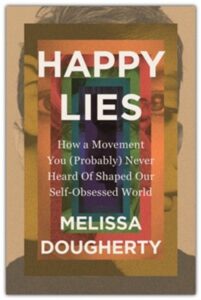
Happy Lies, by Melissa Dougherty
If this book’s title or the author’s name sounds familiar, it may be because I have done at least two prior posts excerpting from the book. I also recommended Dougherty’s YouTube channel in another post. The subject of the book is “New Thought”, referenced in the subtitle, How a Movement You (Probably) Never Heard of Shaped Our Self-Obsessed World. From the back of the book: “A former follower of its teachings, Melissa provides clarity, compassion, and a dash of loving snark as she exposes New Thought’s subtle deceptions. You’ll be shocked, grieved, and encouraged…. Uncover the secrets of this dangerous ideology so you can joyfully live faithful to the gospel that is so much better than our world’s happy lies.” A wonderful and necessary first book from Ms. Dougherty.
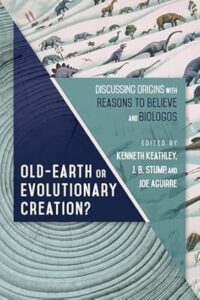
Old-Earth or Evolutionary Creation?, by BioLogos and RTB
This choice should be no surprise to my regular readers, since it was the source for four blogposts last year: “RTB on Concordism, ID Theory, and Evangelism”, “BioLogos on TE/EC, Its Scientific Tent, and Differences with RTB”, “Lucy and the State of Hominid Evolution”, and “Neanderthals and the Case for Human Exceptionalism”. The book was the product of multiple meetings between the BioLogos and RTB scholars over several years, finding common ground and discussing their differences in approach and belief in science/faith matters. A group of Southern Baptist seminary professors then jumped in to make it a 3-way dialogue. While some frustration has been expressed regarding certain interchanges, what was said or not said, etc., that is not surprising considering the topics addressed. Nevertheless, I found the book to be beneficial both in terms of the sciences discussed and in terms of both sides providing some clarification to where they were coming from, yet maintaining a generally irenic tone.
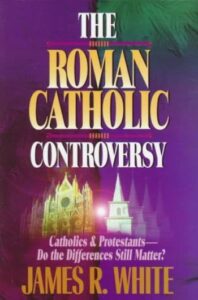
The Roman Catholic Controversy, by James R. White
From the Foreword by John H. Armstrong:
“White shows that modern Catholic doctrinal formulations (e.g., The Catholic Catechism, 1994) still significantly conflict with the plain teaching of God’s Word…. [He] shows how the Mass, Purgatory, and prayer to Mary and the saints are all doctrines that actually undermine the grace of God in the Gospel…. He understands both Roman Catholic teaching and the Scripture. He takes the time to properly delineate both and then shows why Catholicism fails to measure up to the Gospel revealed in Scripture.”
It has been roughly 30 years now since White published this book, but it remains as relevant and beneficial as ever, especially for those who have family or friends who are Roman Catholic or are considering converting to Catholicism.
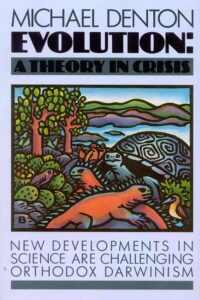
Bonus Re-read: Evolution: A Theory in Crisis, by Michael Denton
Here’s another book that may sound familiar, if for no other reason than that it was listed in my “Top 7 Recommended Creation/Evolution/ID Books NOT by RTB/Hugh Ross” post, and then I excerpted it a few months later after re-reading it. (Still haven’t read the sequel, though.) You may think it outdated after 40 years, but I’m pretty sure most of the facts and observations hold up in this early ID-friendly book. Topics include the evolutionary tree, typology, homology, the fossil record, molecular biology, life’s origin(s), the “puzzle of perfection”, etc. It can get a bit technical but not too dense, so… lay-friendly for the science-minded, and certainly worth perusing even if you aren’t.