Apr
26
Why Are Electricity Prices Rising?
“As many energy analysts have been warning for years, even impressively declining solar and wind costs will not enable renewables to meet all or even most of the electricity demand facing modern power grids.” — Alex Trembath, Dispatch Energy
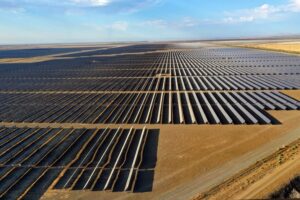
As I have stated before, The Dispatch newsletters are not exactly my favorites, since I often disagree with their takes on socio-political matters, or at least some of their assumptions and/or conclusions. But, they are generally well worth reading, and I have shared excerpts from Dispatch Faith and Dispatch Energy in the past. This week I will be citing from (and linking you to) another, recent Dispatch Energy article.
The article was written by Alex Trembath. According to Trembath’s bio, he is “executive director of the Breakthrough Institute, a policy think tank advancing technological solutions to environmental problems. He is one of the world’s leading advocates for ecomodernism and abundance.” Trembath has worked with several groups focused on environmental issues and/or abundance and has also contributed to various periodicals — from The Atlantic to The Wall Street Journal.
In this article, Trembath addresses the “hidden challenges of renewable energy” as he answers the titular question above. (For the record, he is much more positive and optimistic about renewables than I am.) He begins…
— — —
Since the start of my career in energy more than 15 years ago, I’ve been hearing about — and, indeed, actively championing — the declining cost of renewable energy technologies. Between 2010 and 2023, the price of wind turbines fell by about 70 percent and the price of solar panels fell by 90 percent. Lithium-ion batteries, which can store electricity for short durations when the sun isn’t shining and the wind isn’t blowing, have also shown impressive gains in both performance and price, dropping about 90 percent in cost through 2023.
Given these advancements, renewables are now competitive on a per-kilowatt-hour basis with incumbents like coal, nuclear, and natural gas. So why are electricity prices rising?
The explanation is threefold. First, the intermittency of wind and solar means that even very affordable renewable energy relies on enabling technology and infrastructure, like natural gas plants and extensive networks of power lines, with the consumer price set by the overall system. Second, though wind turbines and solar panels are cheap, they are increasingly running up against geographic limitations. The sunniest and windiest places are not always close to cities and industrial sites, or to transmission infrastructure that can connect generation to demand.
These two factors are exacerbated by a third, which is perhaps the defining energy phenomenon of our era: U.S. electricity demand is rising for the first time in a generation. The electrification of vehicles and HVAC systems, artificial intelligence and other emerging industries, and growing use of air conditioning are combining to increase electricity demand faster than new sources of power generation are coming online. That lag time pushes prices up, and it’s just the beginning.

[From here, Trembath looks at each of the three limiting factors in more detail. I will include a brief quote from each section.]
While many renewables advocates have come to believe it’s a form of trolling to point out that the sun doesn’t always shine and the wind doesn’t always blow, it is, in fact, true. And because they’re both intermittent and have no fuel costs, wind farms and solar plants largely act as fuel-savers for the nation’s natural gas and coal plants…. [O]ver the long term, grids that include more and more wind and solar will inherently require substantial overbuilding of redundant capacity to smooth out lulls in sunlight or wind….
[E]ven in areas that allow renewable energy development, other geographic features may get in the way. For example, the Northeastern United States has both high population density and dark, snowy winters — not exactly a welcoming combination for land-intensive and weather-dependent renewable energy projects. Many Eastern states had hoped offshore wind projects would overcome these limitations, but due to both economic and political factors, the U.S. offshore wind industry has failed to scale….
The dynamics that defined the expansion of U.S. wind and solar power over the past two decades have been completely upended by more recent technological developments. A steady migration toward air conditioning-reliant states like Arizona, Florida, and Texas, together with the growing adoption of electric heat pumps and vehicles, is helping drive electricity consumption up for the first time in a generation. But the big story, of course, is AI data centers, whose power consumption could triple (or more) within a decade.
So it’s telling that, while wind and especially solar continue to grow steadily in the United States, data centers are relying overwhelmingly on natural gas to meet their immediate power needs — at least for now….
— — —
Trembath ends with the quote I put at the top of this post, followed by a couple bullets of “Policy Watch” for the energy industry, as well as a couple bullet points for suggested “Further Reading”.
At the very least, I suggest reading Trembath’s entire article here.