Jul
12
Structuralism of the Gaps?
My regular readers may recall that I did a few posts last year in which I quoted Michael Denton, MD, PhD, from his book Evolution: A Theory in Crisis (1985). It was the Bonus Re-Read in my “Five Non-Fiction Books I Enjoyed Reading in 2025” post. This year, I am (slowly and sporadically) working my way through Denton’s follow-up, Evolution: Still a Theory in Crisis (2016). It is an excellent book; but, for various reasons, I’m having trouble both finding the time and “getting into it”. I’m sure I’ll get into the groove eventually…
Denton’s skepticism about support for the Modern Evolutionary Synthesis is still there, but his overall view has, ahem, evolved. He is not a creationist of any stripe, and (afaik) remains religiously agnostic. But, as the following selections from the first chapter of his 2016 work make clear, he now leans heavily toward a form of structuralism…
— — —
I still adhere to this discontinuous typological view, although since I wrote Evolution, I have adopted a much more structuralist conception of organic order and particularly of the Types. When I wrote Evolution, I was a convinced pan-adaptationist and held to a strictly functionalist view of biological systems. I saw adaptation as the major or sole organizing principle of life, and I regarded organisms as primarily “adaptive bundles,” analogous to machines like a watch, in which every feature is there to serve some specific adaptive end. I saw the Types primarily as a limited set of highly integrated functional wholes… highly constrained for functional reasons, like a complex machine, against even slight degrees of evolutionary change.
But I failed to see what is very obvious to me now, more than thirty years later, as a convinced structuralist: While “Cuvierian functional constraints” may well play a role in “isolating the Types,” not all features of living things are there to serve some adaptive purpose, and many of the taxa-defining novelties — such as the pentadactyl limb (Tetrapoda) or the concentric whorls of the flower (angiosperms) — give every appearance of being a-functional “primal patterns” which have never served any specific adaptive end. Such apparently non-adaptive forms pose, as Richard Owen showed in his landmark publication On the Nature of Limbs (ten years before Darwin’s Origin), a self-evident challenge to pan-adaptationism. Indeed, these apparently non-adaptive forms post an existential threat to the whole Darwinian and functionalist paradigm, because they imply that causal factors other than cumulative selection to serve functional ends must have played a crucial role in shaping living systems….
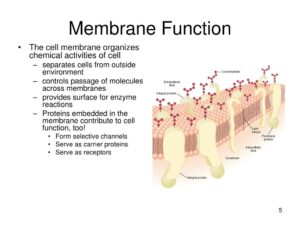
According to the structuralist paradigm, a significant fraction of the order of life and of every organism is the result of basic internal constraints or causal factors that arise out of the fundamental physical properties of biological systems and biomatter. In other words, biological order that does not result from adaptation to satisfy functional ends. One of the simplest examples of this kind of order, “structural order,” is the cell membrane, which organizes itself into a thin layer covering the surface of the cell due entirely to the hydrophobic character of its lipid components — i.e., due to physical law — irrespective of any functional end it may serve…. Structuralism — at least in the form it took in the nineteenth century, and in the version I am defending here — implies that the basic Types of life, and indeed the whole evolutionary progression of life on earth, are built into nature. Thus, life is not an artifact of “time and chance,” as it came to be seen after Darwin, but a predictable and necessary part of the cosmic whole….
According to the opposing paradigm, often referred to as functionalism, the main or sole fundamental organizing principle of biology is adaptation. On this view, the main Type-defining homologs (pentadactyl limb, etc.) are adaptations built by cumulative selection during the course of evolution to serve various adaptive ends. Biological order built in this way is contingent in the sense that it is undetermined by natural law. Functionalists reject the structuralist notion that there is a significant amount of biological order that is the result of physical law, i.e., immanent in nature or arising from intrinsic constraints inherent in biological systems or the properties of biomatter. According to the functionalist view, organisms are, in essence, like machines, contingent assemblages of functional parts arranged to serve particular adaptive ends. This is, of course, the currently prevailing and mainstream view. All Darwinists, and hence the great majority of evolutionary biologists, are functionalist by definition, as all evolution according to classical Darwinism comes about from cumulative selection to serve functional ends.
It is hard to imagine two scientific frameworks as diametrically opposed as structuralism and functionalism. Where functionalism suggests that function is prior and determines structure, structuralism suggests that structure is prior and constrains function. It is extraordinary to think that leading biologists have seen exactly the same empirical facts as pointing in such very different directions….

[Denton here takes a few pages to discuss the “growing and sustained critique of Darwinian pan-selectionism in many quarters” over the past three decades of advances in biology, genomics, etc., including quotes from notable players (e.g., leading evo-devo researcher Günter P. Wagner). He concludes that section by saying…]
Admittedly, there are still many prominent figures such as Michael Ruse, Jerry Coyne, Daniel Dennett, and Richard Dawkins who strictly adhere to a pan-adaptational framework and to the notion that all macroevolutionary phenomena, from the origin of life to the origin of man, can be generally accounted for by the same mechanism, cumulative selection, that works at the microevolutionary level. But despite these dyed-in-the-wool Darwinists, there is now a growing chorus of dissent within mainstream evolutionary biology! A significant number of researchers, particularly in the new field of evo-devo, now argue that macroevolution requires an explanatory framework different from that of microevolution — thus confirming the underlying leitmotif of Evolution: A Theory in Crisis.
— — —
One day, I hope to hear that Denton has become a follower of Jesus Christ. In the meantime, however, I think he plays a valuable role as a (friendly) non-Christian with unassailable and relevant credentials who continues to buck the Neo-Darwinian mainstream, honestly assessing the “consensus” story for the development of life on Earth and unabashedly pointing out its many flaws. His structuralist approach is great for this purpose, though I of course think it doesn’t go far enough.
Are there more recently-published volumes on these and related topics? Absolutely, and Denton has written a few himself. But, Evolution: Still a Theory in Crisis is not one to be overlooked.
