Jul
7
History and Myth in the Old Testament Creation Texts

This is the third entry in my series citing Rescuing Inerrancy: A Scientific Defense (2023) by Dr. Hugh Ross, which I began this past May.
In this week’s excerpt, Ross addresses the ideas of “history” and “myth” in interpreting the Old Testament creation passages. How similar are these texts to those of other Ancient Near Eastern peoples/cultures? How did Jesus and the biblical authors treat Scripture? What can we gather when considering literary genre, vocabulary, and other textual clues? Etc.
Read on…
— — —
Bruce Waltke has suggested that God inspired Moses to compose the Genesis creation account in “the garb of the Mesopotamian cosmogony.” John Walton claims that the key to understanding the Old Testament “is to be found in the literature from the rest of the ancient world.” Tremper Longman III devotes a lengthy chapter of Reading Genesis 1-2 to affirming that ANE texts strongly influenced what Genesis teaches. Several other evangelical theologians have written books arguing that Genesis 1-11 and the rest of the Old Testament should be interpreted in the genre of the ancient mythological literature of the Akkadians, Sumerians, Egyptians, and Canaanites.
Before offering a response to the claim that we must for the sake of scholarly integrity interpret the biblical creation accounts in this new way, I would like to note where broad theological agreement concerning these passages does exist. First, both liberal and conservative theologians agree that Genesis 1-2, Job 37-42, Psalm 104, and Proverbs 8 — the major creation texts — display awe-inspiring majesty and grandeur. Scholars openly admire the exquisite beauty and elegance of the prose and poetry in these passages. Even people who do not believe in God are known to quote from these literary masterpieces.
Second, scholars widely acknowledge that these texts carry theological significance. They agree with Peter Enns that a “christotelic coherence” — “that Christ is the goal” — is evident in all the major Old Testament creation texts. In other words, these passages all point to Christ as Creator of everything that has been made.
One further point of agreement is that the biblical creation texts differ from various ANE myths in their lack of political motivation. ANE creation literature consistently links cosmology with ancient politics. The Bible’s creation texts neither state nor imply a political message.
The genre debate focuses on this question: Do the Old Testament creation texts refer to actual, physical, potentially discernible events of the past, or do they not? From among those who for centuries would have answered with a resounding affirmation (“They do!”) now comes a mixed response, as noted by the comments quoted in the previous section. While some still say yes, many now say the texts should be interpreted as creation myths, not as history, and certainly not as literal accounts.
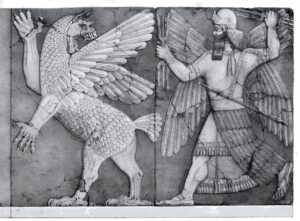
To some extent, the dual meaning of “myth” presents a problem. As a genre, the term refers to a traditional story, often a culture’s origin story involving supernatural events or beings. However, myth can also refer to a widely held but false belief. Generally speaking, a myth is not expected to be “true”. So, it seems easy to assume that by referring to Genesis 1-11 as myth, Peter Enns and others who share his perspective expect the passage to have little or no connection with actual history. This “myth vs. narrative” dilemma is further complicated by William Lane Craig’s assertion that the passage be regarded as “mytho-history.”
As discussed in chapter 2 (see “More Inerrancy Challenges Follow”), Craig hold that Genesis 1-11 includes a few historical elements, including a true, historical human, Adam, from whom all humans are descended, but he denies that it should all be read literally or chronologically because it also contains nonhistorical elements. In other words, as Craig sees it, this portion of Scripture is filled with elements that cannot possibly be true if interpreted literally and historically. Therefore, to a large degree it must be myth.
Both the pre- and post-Nicene church fathers recognized the Genesis creation accounts as foundational to biblical theology. Accordingly, on the first chapter of Genesis alone, they wrote well over two thousand pages. They were also unanimous in their belief that the Bible was polemical, in the sense that it stood against the cultural milieu. For example, they saw Paul’s admonition against conformity with the world’s thinking (Romans 12:2) as an echo of Joshua’s Old Testament calling of God’s people to “be separate.”
The Bible’s message consistently goes against the cultural grain. Certainly, there are similarities between the ANE accounts of creation and the Genesis account. Both address the basic origins questions. However, that is where the similarities end. The differences between the ANE and biblical creation accounts are far greater than their similarities. As theologian Gerhard Hasel observed in an Evangelical Quarterly article, Genesis 1 is “not only a complete break with the ancient Near Eastern mythological cosmologies but represents a parting of the spiritual ways brought about by a conscious and deliberate antimythical polemic.”
The ANE creation accounts speak of many gods. In the Bible’s creation texts, there is only one God. In the ANE creation accounts, matter predates the existence of gods, and gods arise from eternal (or previously existent) matter. In the Bible, God is eternal and is the Creator of all matter, energy, space, and time. The God of the Bible transcends his creation whereas ANE gods are merely deified natural forces. In the ANE creation texts, the gods reflect the fallenness of humans. They engage in immorality and continual conflict with one another. The God of the Bible is morally perfect, and the triune godhead exhibits perfect harmony, peace, and love. In the ANE creation texts, humans emerge as an afterthought or from the remains of a vanquished god. The biblical creation account shows God’s purposeful progression toward a climactic act — creation of humans in his own image. In the ANE myths, the gods create humans to serve them. In the Bible, God creates humans to serve others, alongside him. The God of the Bible grants to humans the power and authority to rule over all Earth’s resources and all Earth’s life. In ANE texts, humans are depicted as subservient to capricious and terrifying nature gods.
In every important respect, the Bible’s message differs radically from those of ANE literature. The Old Testament books were written by men best described as countercultural. Moses, Isaiah, and Jeremiah set the tone for all the Old Testament authors in emphatically and consistently countering the surrounding ANE cultures and beliefs.
The form and content of the biblical text should be the indicators of its genre, taking precedence over ANE cultures and beliefs. In this case, even if the biblical text’s purpose — to present an account of origins — slightly resembles that of ANE myths, there is no reason to conclude that it must be a merely traditional, nonfactual story. Can it not be considered, as in the words of C.S. Lewis, “a true myth: a myth working on us the same way as the others, but with this tremendous difference that it really happened?”
The 39 human writers of the Bible’s 66 books understood that the Holy Spirit was the guiding voice behind everything they wrote. [Note: I wish Ross had qualified this to something like “…everything they wrote while prophetically proclaiming God’s message.”] In many biblical passages, the human authors explicitly declared that what they were writing was inspired by God himself. The phrase “thus says the Lord” appears 427 times in the Old Testament.
Jesus often quoted from and referred to Old Testament passages as true and trustworthy. The apostle Paul assures the early Christians, “All Scripture is God-breathed and is useful for teaching, rebuking, correcting, and training in righteousness” (2 Timothy 3:16), and the apostle Peter affirmed that “prophecy never had its origin in the human will, but prophets, though human, spoke from God as they were carried along by the Holy Spirit” (2 Peter 1:21).
Miraculously, every one of the 66 books of the Bible conveys the same theme: God’s redemptive plan and purpose for humanity. Each reveals, in one way or another, that our transcendent Creator is moved by love to create beings who can experience genuine love in a never-ending relationship not only with him but also with countless others — a relationship made possible at infinite cost to him. This message is not for just one generation of humanity. It is for all generations. While the human author of Genesis did have his own generation in mind as he wrote, the divine Author’s intent was to communicate to a far broader audience. The biblical text addresses all of humanity’s cultures and generations.
The Bible’s redemptive theme is sustained by the record of nature. That God began his work of redemption before he created anything implies that all of nature is designed to make possible not only the existence but also the redemption of a vast host of humans.
Even though the language and genres of biblical texts are shaped by the biblical writers’ varying times and cultures, the fundamental meaning of the Bible is transcultural. The Holy Spirit knows the meaning of what has been written and promises to guide us toward ever-deeper understanding. He uses genre and prayerfully discerned interpretive principles to help us today, just as he helped ancient peoples of the world and will help future generations.

Most books of the bible manifest the traits of one particular genre — history, law, wisdom, poetry, prophecy, gospel, epistle, or apocalypse. While some books combine genres, the transition from one genre to another is distinct and recognizable. In the book of Job, the shift from historical prose to poetry is unmistakable. So is the inclusion of poetry (Mary’s song) in Matthew’s Gospel. No such change exists at the end of Genesis 11.
I have yet to meet a Christian theologian who would identify the genre of Genesis 12-50 as anything other than historical narrative. The only literary basis for labeling Genesis 1-11 as anything other than history is that these chapters point back to a time when oral tradition, rather than written records, accounted for historical events. However, all fifty chapters of Genesis describe history that occurred before Hebrew became a written language.
Genesis includes genealogies (family trees), the longest in chapters 5 and 11. Genesis 1-11 is replete with time markers, names of specific individuals, and geographical locations and directions. Repeatedly, the phrase “these are the generations of” appears as an unmistakable indicator of the progression of historical events. Such references serve as clear indicators of specific historical content, and yet these first eleven chapters of Genesis are most often challenged for their historicity — especially Genesis 1.
Ironically, no other chapter of the Bible contains more historical and chronological indicators than Genesis 1. The chapter is organized into a pattern of numbered days that follow one after the other. Each of the first six creation days is closed out with the phrase “evening was, morning was, day X.” The repeated use of this phrase indicates that each of the first six creation days had a start time and an end time within Earth’s history.
The repeated use of the phrase “and it was so” implies something physical occurred at a particular juncture in Earth’s history. God’s comment at the end of each creation day (with the exception of day 2), that “it was good”, again communicates that something of great significance had been accomplished at that point in Earth’s history. On creation day 4, the first-time appearance of the Sun, Moon, and stars as distinct objects visible from Earth’s surface — markers for Earth’s creatures to measure the passage of days, seasons, and years — does more than just suggest historical intent. It seems the Genesis 1 author goes overboard to make it clear he is writing a historical, chronologically ordered narrative.
In Genesis 1-2, the use of the Hebrew verbs bara, asa, haya, and yatsar, typically translated as “create”, “make”, “let there be”, and “formed” or “fashioned”, are not the verbs one would expect to find in passages that have nothing or little to do with history or acts of creation. They are exactly the verbs one would need, however, to describe the origin and history of Earth and Earth’s life.
The physical events described in Genesis 1-11, especially those in Genesis 1, are referenced again, with added detail, in Job 37-39, Psalm 104, and Proverbs 8. No hint appears in any of these other texts that the physical events mentioned did not actually occur. Jesus, Paul, and the author of Hebrews also refer to the physical events described in Genesis 1-2 as real events occurring in history. To deny the historicity of these chapters leads to questioning the reliability of much of the rest of Scripture.

So, one must ask: What would prompt so many wonderful Christian leaders, scholars, and defenders of the faith and the gospel to now take such a strong stance against the long-held doctrine of Genesis as a trustworthy revelation of historical and scientific truth? The answer is provided by one of the movement’s most influential and articulate leaders, Peter Enns, whose books and articles have been quoted in this and previous chapters.
Enns and many other theologians have become understandably convinced by the work of a truly brilliant and respected brother in Christ, Francis Collins, who founded the organization BioLogos in 2007. According to Collins and the leaders of BioLogos, the evidence for common descent of all life from the last universal common ancestor (LUCA, a microbe that somehow came into existence ~3.8 billion years ago) through natural selection, mutations, gene exchange, and epigenetics is so overwhelming that all Scripture must be interpreted to fit — or at least to not conflict — with this scenario. This scenario has been firmly embraced by many theologians today.
Genesis 1-11 is neither poetry nor fantastic myth. This portion of the Bible is plainly narrative in the same sense that Joshua, Judges, Ruth, 1 and 2 Samuel, 1 and 2 Kings, and 1 and 2 Chronicles are. Most evangelical theologians who question or deny the historicity of Genesis 1-11 continue to affirm the truthfulness of these other historical narratives.
This affirmation is not surprising. These other books present no conflict with biological evolution. They certainly do, however, contain certain “fantastic” elements — a floating axe head, chariots of fire, and a sundial shadow moving backwards, for example. To claim that we must deny the historicity of Genesis 1-11 because of the text’s wildly “fantastic” elements means we must also deny the historicity of these other historical books, at least in part, in order to be consistent. Like Genesis, these books clearly imply God’s miraculous intervention. Thus, they set the stage for the unfolding drama of God’s direct intervention for the sake of our redemption.
— — —
Ross presents, imho, a pretty convincing argument for why Enns et al. are incorrect in their assertion that Christians must deny the historicity of Genesis 1-11 in favor of some sort of mythic reading for the sake of scholarly integrity. Sound biblical hermeneutic does not require it, and — as explained briefly in this book and in more detail elsewhere — good scientific practice does not demand it, either.
