Oct
4
Dark Matter, Cats, and Alzheimer’s Detection
“It’s the most interesting thing that’s come up in recent times. So I definitely think that there’ll be a flood of people looking at this event.” — Wick Haxton, theoretical physicist at University of California, Berkeley
Here are three science news announcements that were made last month (Sep. 2026) and which piqued my interest. I’ve only had time to read one article on each discovery, so I’ve quoted enough to give you the gist and linked to each article for more. If you find other articles on these topics that you find helpful, please give us the URLs….
1) “Dark Matter Hunters May Have Finally Spotted a Hint of the Particles”

“One day in June 2023, the numerous, unblinking electronic eyes of the LUX-ZEPLIN detector may have glimpsed something remarkable — possibly the first direct detection of the shadowy dark matter that pervades the cosmos. Or it may have been just another Friday.
A new analysis of data from LUX-ZEPLIN, or LZ, found a single particle interaction that is consistent with dark matter, researchers report September 1 at the TeV Particle Astrophysics meeting in Tendo, Japan, and in a paper posted on LZ’s website. But one event is not conclusive. Without more data, scientists can’t be sure what it is….
LZ has already collected additional data — at least three times as much as what the researchers have already analyzed. If dark matter really is behind this event, there are likely others waiting to be found….”
2) “Meet the Newest Living Cat Species, the First Described in 100 Years”
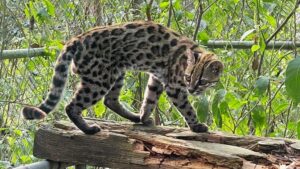
“Meet Leopardus tilcayo, a pint-size tiger cat discovered in Bolivia in the Yungas forests of the central Andes Mountains. L. tilcayo, reported September 17 in Current Biology, is the first new living cat species described and named by scientists in more than 100 years. The last one was the Uruguayan pampas cat (L. fasciatus), described in 1923.
L. tilcayo has a slender body, spotted fur and a ringed tail. It weighs roughly two kilograms, about as much as a two-month-old domestic kitten. For such a tiny cat, L. tilcayo has made a terrific splash, pouncing into headlines around the world….
The researchers analyzed the genetics of 38 species of the Leopardus genus, which includes tiger cats as well as more widely known animals like the ocelot. They expected to find two, three or even four distinct species of tiger cat. Instead, Lescroart and his colleagues’ analyses pointed to five separate species, including one that scientists had never before described: L. tilcayo….”
3) “MRIs Show Brain Changes Linked to Alzheimer’s Years in Advance”
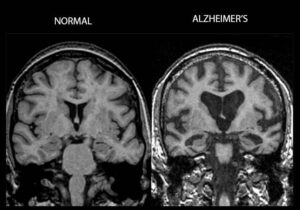
“To better understand how the disease takes shape, Alzheimer’s researcher Yunpeng Wang and colleagues wanted to test whether they could spot brain changes before patients developed A-beta buildups.
The team examined MRI scans from over a thousand participants in long-term studies that track brain changes with aging. Wang and colleagues compared changes in the thickness of the cortex — the outermost layer of the brain, which averages around 2.5 millimeters thick — between people who later showed high A-beta levels and people who did not….
The findings imply that ‘the trajectory of cortical changes is not [as] simplistic as we used to think,’ says Victor Montal, a degenerative diseases researcher at the Barcelona Supercomputing Center who was not involved in the work. Rather than assuming the cortex thins consistently due to atrophy as the disease progresses, researchers will need to account for slower thinning in the early stages when studying Alzheimer’s, he says.
The relative thickening of the cortex might come from inflammation that occurs as A-beta first starts to accumulate, says Wang, of the University of Oslo. But MRIs can’t determine the cause of the thickening directly. [Also,] the changes in cortex thickness are too subtle to use as individual diagnostic tools,… but they could help researchers understand the mechanisms behind Alzheimer’s disease and emerging treatments.”
Any science articles catch your eye over the past couple months?
